

The scene is an acquainted one. People sit around a rectangular table; an easy iron cooktop takes up most of that. Gas flames flicker beneath. A man sporting a tall crimson hat and a white chef’s uniform procedures, pulling a cart full of cold meals, huge cooking utensils, and various sauce bottles. He holds a spatula and a big metallic fork. He brings them collectively: grasp-clang, grasp-clang. Eyes sparkling, he looks across the table. “Welcome to Benihana.”
More normally called hibachi, Japanese teppanyaki-style cooking has become part of the American eating revel. The combination of noodles, rice, veggies, and meat fried up on a griddle draws clients to these eating places as much as the chefs’ loud and showy flair cooks at the desk.
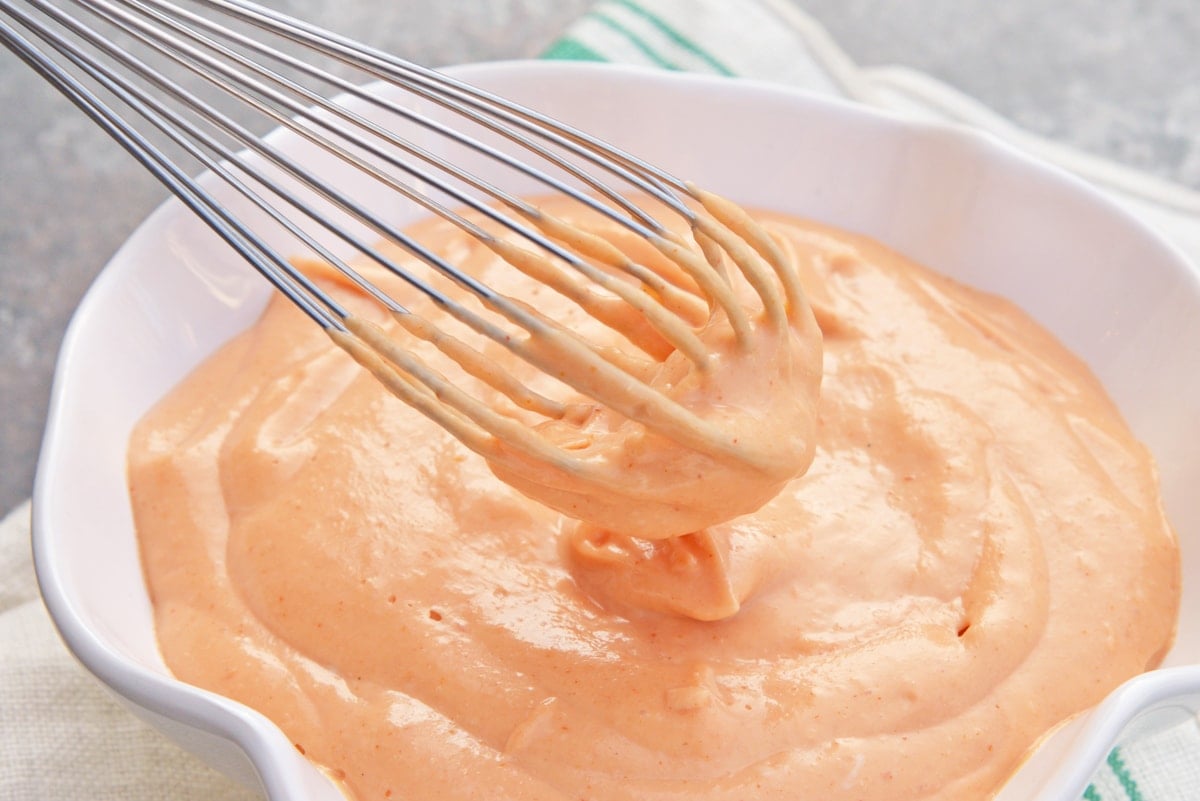
One of the extra diffused curiosities of teppanyaki restaurants — beyond the stacked onion earrings of fire and a behind-the-again toss of metallic utensils — is a creamy orange-red sauce placed beside your steaming meal. Almost every teppanyaki eating place will serve it, although its name differs depending on whom you talk to. White sauce (a deceptive moniker), shrimp sauce, yummy sauce, and yum yum sauce are all used interchangeably.
Many in America are a Japanese conventional (one Reddit user is known as “infamous”; a blogger speculated that there are handiest “two types of people that dine at a hibachi eating place, those who get the double white sauce and those that do not recognize you could get double white sauce”), the sauce’s candy, slightly tangy taste varies between restaurants and regions as much because the name does. A little greater sweetness in one place. A little greater tang in every other. Some versions pay homage to fry sauce, which is famous in the South. Such variety asks whether the sauce we flavor in our neighborhood teppanyaki eating places is Japanese.
Maybe no longer exceptionally; the answer, it appears, isn’t any.
Nancy Singleton Hachisu, the writer of three cookbooks on traditional and modern Japanese delicacies, became harassed when I first asked her about the sauce. She hadn’t heard of it being utilized in Japan and actually objected to my preliminary query about hibachi eating places. “Since hibachi is a conventional charcoal heater for the room,” she told me, “I can’t assume that Japan could yield facts in this subject matter.”
Once I despatched her a description of the sauce, which I called shrimp sauce, and she referred to it as “essentially red mayo,” she instructed me that there is no proof of its use in Japanese cuisine.
Elizabeth Andoh, who has lived in Japan for half of a century and runs the Japanese culinary school program A Taste of Culture, became at a loss for words. “I do not know of any white sauce or shrimp sauce served with Japanese steak,” she said. When I induced her with a momore precise description, she said, “This type of mayo-primarily based … Tomato sauce isn’t part of any Japanese steakhouse repertoire I recognize.”
Polly Adema, director of the food research application at California’s College of the Pacific, stated that the sauce’s origins are fuzzy, even though it is probably not deeply rooted in the Japanese lifestyle now. Perhaps, she said, the sauce stems from congruent American and modern Japanese tastes for mayonnaise.
Andoh said that the Japanese are “mayo loopy.” But such speculation would not get you very far.
“Which came first: an affection for mayo or a mayo-enriched dish?” Adema requested. “[It’s] one of those questions we may also never be able to solve.”
The recipe for the sauce is similarly hard to come back using. I reached out to 15 one-of-a-kind restaurants around the U.S. — massive chains and independently-run joints — but everyone turned down my request. “We can’t reveal that data,” a Benihana manager in Maryland informed me. I acquired comparable solutions from a Sakura in New Jersey, an Edohana in Texas, and a Flame in New York.
Chuck Cutler encountered a completely similar problem 25 years ago when he first tasted white sauce in a teppanyaki restaurant. “I noticed that everyone at the table has been asking for bowls of white sauce … So I attempted it. I became instantly hooked.”
Cutler spent a decade asking exclusive restaurants for the recipe, to no avail. “It’s a Japanese secret,” cooks could tell him. One day, even though he stumbled across a sauce produced by using a teppanyaki eating place in a Florida grocery shop, he stumbled across a sauce. He remembers it being known as a vegetable sauce. So he bought a bottle “and darned if it failed to flavor precisely like what I was searching.”
Using the elements listed on the vegetable sauce bottle, Cutler changed into providing you with his recipe (Chuck’s Easy Recipe). In revenge against the rejected restaurants, he made a website for Japanese-Steakhouse-White-Sauce.Com. According to Cutler, it was the first good recipe online. Created nearly a decade and a half ago, the internet site now has 229 pages of feedback from traffic. There “are hundreds of comments from people all around the international saying, ‘Oh my God, I’ve been looking for this forever,’ ” he said. “Ninety-8 percent of them is tremendous.”
The sauce’s recognition and intrigue led one teppanyaki eatery proprietor, Terry Ho, to begin bottling it in bulk. He owns more than 20 eating places in the South—a few teppanyakis and a few Chinese. He has lived in Albany, Ga., since the 1970s, while his grandfather immigrated to the U.S. From Taiwan.
Ho’s sauce is called Terry Ho’s Yum Yum Sauce.
The name is exclusive and has a nifty branding flow. According to Ho, “Yum Yum Sauce” is more appealing than white sauce or shrimp sauce; neither of those is even a vaguely correct description of the real sauce. “There’s no shrimp in this recipe,” he said. Why are you calling it shrimp sauce?” However, Yum Yum Sauce fits: “Well, I mean, it tastes yummy.”
For years, Southerners who had tasted or heard about Ho’s Yum Yum Sauce — which he made a bit otherwise from others (less oil and sugar) — could come to his restaurants soliciting for sixteen or 20 oz of it. He would dole it out in Styrofoam containers.

